

FAIRMAT Chips
Fairmat Chips are cured, precision-cut composite materials made from 100% recycled CFRP. Designed for traceability, standardized for scalability.
Quick facts
Metric
Value
Form
Cured single-ply elements / composite materials
Fiber type
Woven or unidirectional
Material content
100% recycled CFRP
Resin compatibility
Thermosets & Thermoplastics
Process integration
Manual layup or FAIRMAT Robotic Pick & Place offsite available
Certification
Full specs + CoC provided
What are FAIRMAT Chips?
FAIRMAT Chips are the foundational building blocks of all FAIRMAT materials, created from recycled Carbon Fiber Reinforced Polymer (CFRP) waste through a low-energy, intelligent cutting mechanical process that preserves the integrity and effective length of the carbon fibers. They are composed of 100% recycled content. Chips are cured, single-ply composite elements, available in unidirectional or woven forms. Fairmat has optimized their standard chip sizes to maximize translation of properties and recycling efficiency. Their production involves advanced robotics and AI, leveraging five different proprietary softwares, ensuring consistency, quality, and traceability.
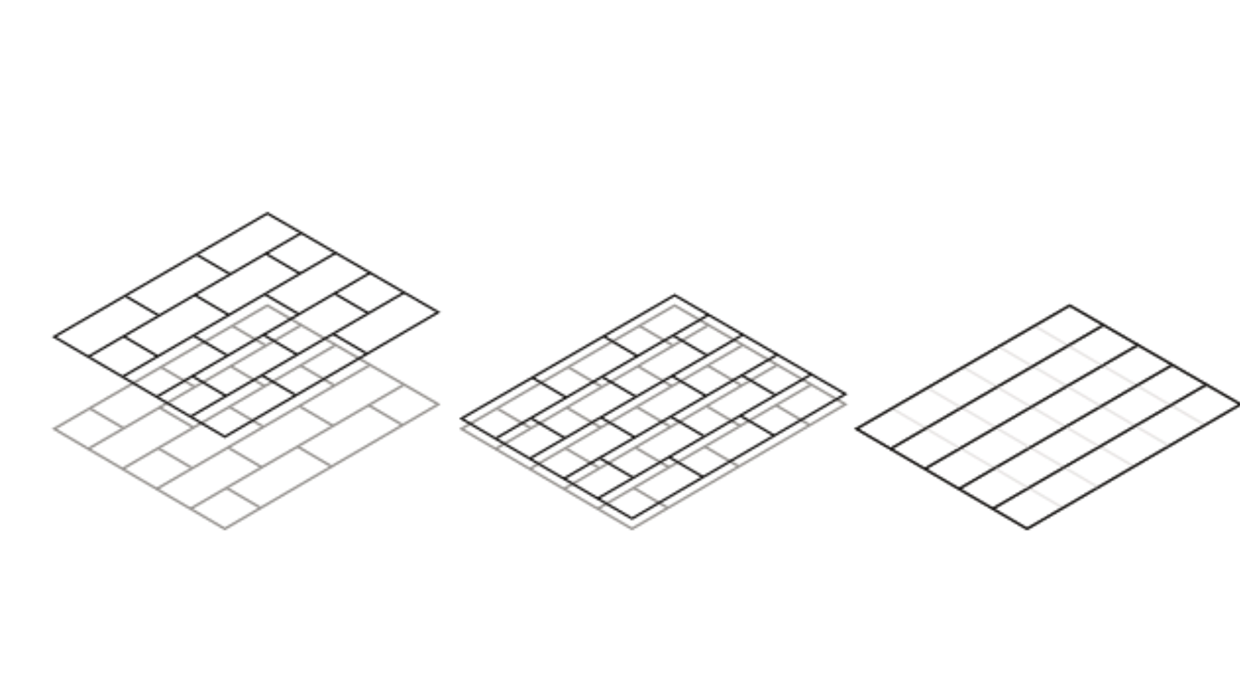
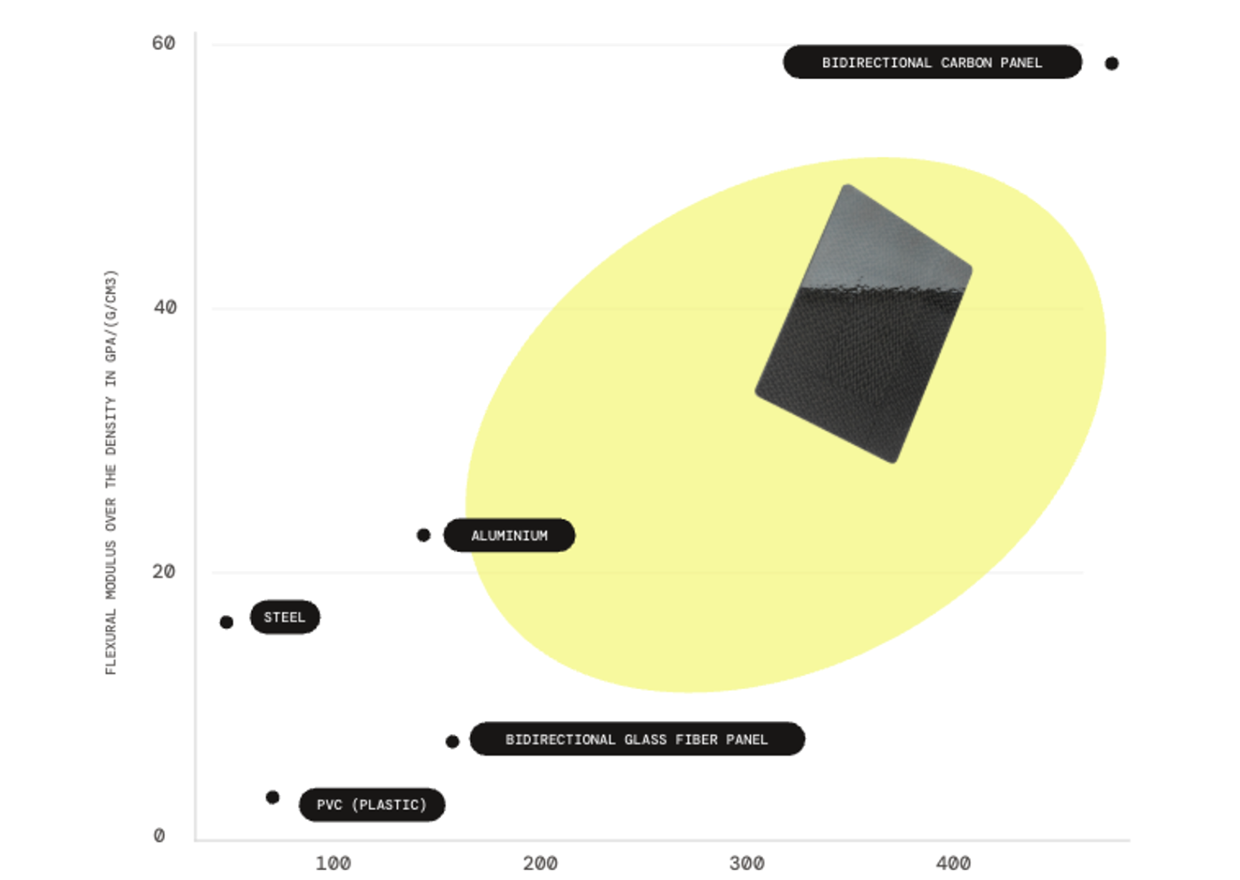
Strength of one, Power in many: How can the chips be used?
Inherently a single chip has limited potential applications. However, when intelligently recombined using new resin and our FAIRMAT software, they become a fully customizable material capable of meeting the structural demands of virtually any industry.
These chips are meant to be assembled in a way that bridges discontinuities, allowing them to carry load throughout the newly formed composite structure. They can be laminated robotically or by hand, by combining them with practically any new matrix or between other virgin materials.
The results is a material that bridges the gap between aluminum and virgin carbon fiber. Maintaining the directionality of the fibers allows for precise design that matches specific load cases and enables lighter, stronger structures at a fraction of the cost of virgin carbon fiber.
Typical properties
Chip Forms & Assembled Laminate Mechanical Properties
Standard Chip
form
CONDENSED thickness
95 x 42 mm
Unidirectional
0.12/0.18/0.24
60 x 60 mm
woven
0.18-0.38
Density
1.4
1.4
Tensile Modulus (GPa) - ISO 527
96
32
Tensile Strenght (MPa) - ISO 527
580
176
Flexural Modulus (GPa) - ISO 14125
81
30
Flexural Strenght (MPa) - ISO 14125
800
301
Compressive Modulus (GPa) - ISO 14126
105
26
Compressive Strenght (MPa) - ISO 14126
636
310
Interlaminar shear strenght (MPa) - ASTM D2344
60
55
Supplied cured and pre-characterized
Delivered with Certificate of Conformity
Why choose this product
Performance
Sustainability
Low Cost
Flexibility
Integration
Quality & Traceability
Applications and format

Frequently Asked Questions
Why are the chips cured?
Using thin, cured chips as our building block is the core of the FAIRMAT technology. It allows FAIRMAT and our customers to achieve multiple things:
Enable the combination of multiple different resin systems in the same laminate without fear of chemical incompatibility.
Expand the possible input material streams. Prepregs may be equally recycled at any point in their life cycle.
Enable fast and efficient handling by our robots or other means of deposition.
Offer the ability to recombine the chips with countless resin system options which provides a wide range of process integration opportunities.
Demonstrate the capability to recycle end-of-life parts through mechanical separation and reach our goal of 100% composite landfill avoidance.

Can I buy only the chips?
No. Our chips serve as the foundational element of our FAIRMAT products. By integrating them into our proprietary manufacturing process, we provide ready-to-use materials that leverage our unique robotic assembly, sustainable design, and end-to-end data transparency.
Is it the combined product comparable to Wood OSB or Carbon fiber SMC?
Not really. While the resulting material is also semi-discontinuous, the Fairmat technology allows to maintain the orthotropic nature of the composite with tailored fiber angles and highly aligned fibers. This results in much greater mechanical performance and the ability to tailor the properties to a specific application or load case.
